
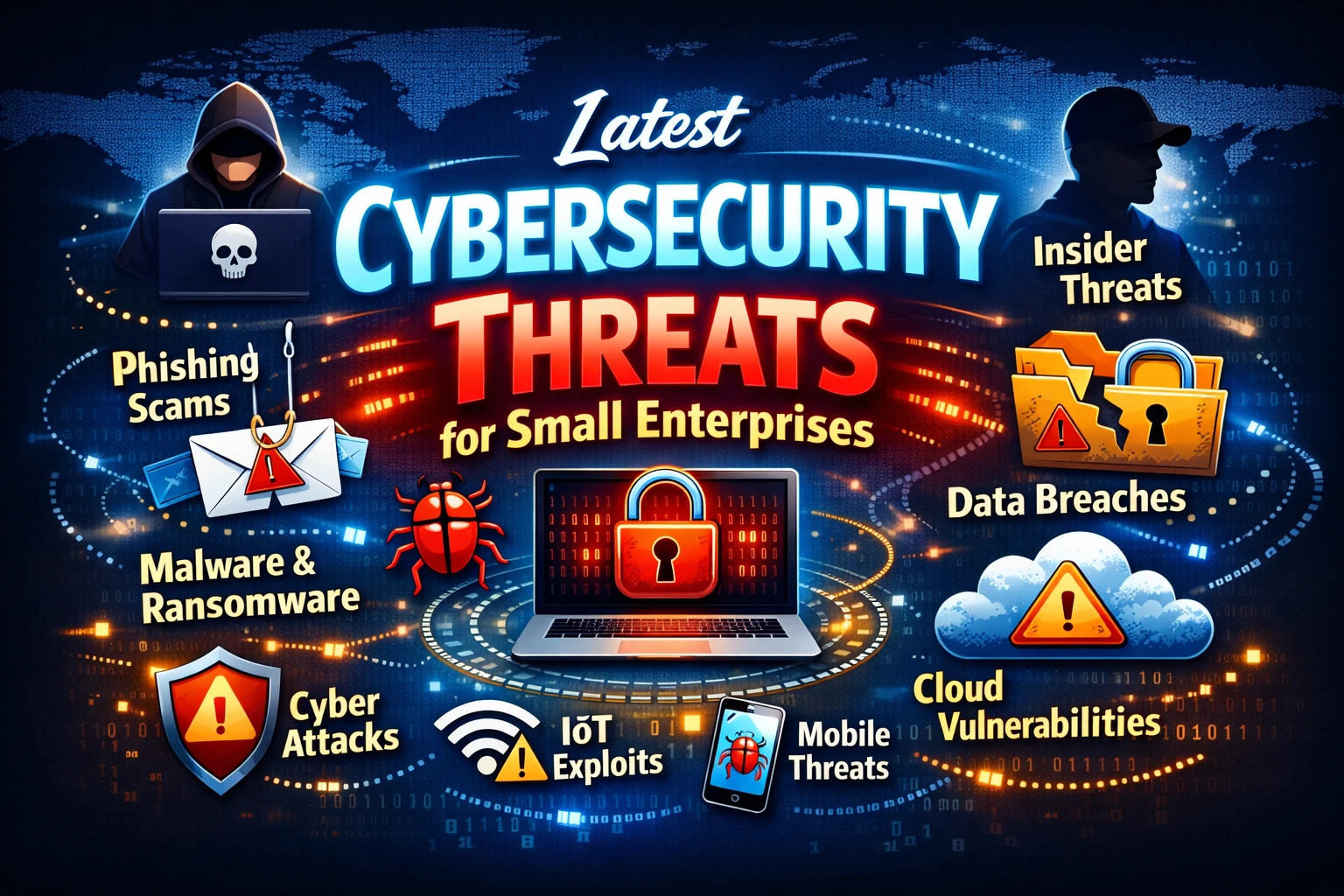
Cybercriminals are shifting their focus from fortified giants to softer targets. This report analyzes the Latest cybersecurity threats for small enterprises in 2025, specifically AI-driven phishing, Ransomware-as-a-Service, and supply chain vulnerabilities. We explore actionable defense strategies, debunk the “too small to target” myth, and provide a roadmap for US-based business owners to secure their digital assets effectively.
Introduction: The Myth of Being “Too Small”
Friends, let’s try to understand it easily. Imagine you run a coffee shop on Main Street or a boutique consultancy in Chicago. You likely think your data isn’t valuable enough for international hackers to care about. I have heard this sentiment countless times over the last decade while covering technology trends across the USA. Business owners often tell me they feel invisible to cybercriminals.
Unfortunately, the reality is quite different. I have seen for myself how the landscape has shifted. Today, automated bots and AI-driven tools do not care about your revenue size; they care about your vulnerabilities. If you have a digital door, they will try to open it.
The latest cybersecurity threats for small enterprises are no longer just about teenagers in basements guessing passwords. They are sophisticated, funded business operations. Let’s dive into what is actually happening in 2025 and how you can protect your livelihood without needing a massive IT budget.
Why Small Enterprises Are the New Bullseye
We have noticed in the last few years a disturbing trend: as Fortune 500 companies build higher digital walls, attackers are pivoting to easier prey. Small businesses often lack dedicated security teams, making them the “low-hanging fruit” of the digital world.
Recent data suggests that nearly half of all cyberattacks are now aimed at small businesses. The logic is simple. It is easier to rob ten small houses with unlocked doors than one bank vault. Hackers know that you probably do not have a 24/7 Security Operations Center. They are banking on the fact that you might be too busy running your business to patch that server or update that plugin.
This shift requires a change in mindset. You are not just a small business; you are a data custodian. Whether it is customer credit cards, employee social security numbers, or proprietary designs, you hold value.
Threat 1: The Rise of AI-Powered Phishing
Gone are the days of the Nigerian Prince emails with bad grammar. The most dangerous evolution we face today is the weaponization of AI.
I recently spoke with a business owner in Austin who nearly lost $50,000 because of an email that looked exactly like it came from his vendor. The tone, the logo, and even the context of a recent project were perfect. This is AI at work.
Generative AI tools allow scammers to ingest your public social media posts and create hyper-personalized messages. They can mimic the writing style of your CEO or your biggest client. These “spear-phishing” attacks are incredibly difficult to spot because they lack the traditional red flags like typos or awkward phrasing.
The “Hello, CEO” Deepfake
It goes beyond text. We are starting to see “vishing” or voice phishing, where AI clones a person’s voice. Imagine receiving a frantic voicemail from your “boss” asking for a wire transfer. The voice sounds identical. This is one of the scariest Latest cybersecurity threats for small enterprises because it hacks our human trust, not just our computers.
Threat 2: Ransomware-as-a-Service (RaaS)
You might have heard of ransomware, but the business model behind it has changed. It is now an industry. We call it RaaS.
Think of it like a franchise model. Sophisticated criminal groups develop the malicious software and then “rent” it out to lower-level hackers. These affiliates do the dirty work of infecting your systems, and they split the ransom money with the developers. This has lowered the barrier to entry significantly.
The Double Extortion Tactic
In the past, they would just lock your files. Now, they steal them first. If you refuse to pay the ransom to unlock your computers, they threaten to leak your private customer data online. For a small law firm or a medical practice, this breach of client trust can be more damaging than the financial loss itself.
I have seen businesses with excellent backups still pay the ransom simply to prevent a public data leak. It is a brutal catch-22 situation that defines the current threat landscape.
Threat 3: Supply Chain Attacks
This is perhaps the most insidious threat. You might have excellent security, but what about your vendors?
A supply chain attack happens when a hacker breaches a system you trust—like your payroll provider, your cloud storage service, or even your HVAC maintenance company—to get to you. Or, conversely, they might hack you to get to a larger client you serve.
If you are a small marketing agency working for a large tech firm, you are a target. Hackers see you as the “backdoor” into the larger company’s network. This trend means that big clients are now demanding stricter security compliance from their small vendors. If you cannot prove you are secure, you might start losing contracts.
Threat 4: Cloud Misconfigurations and Remote Work
The rapid shift to remote work left many digital doors open. We moved to the cloud effectively, but often hurriedly.
The problem isn’t usually that the cloud provider (like AWS or Azure) is insecure; it is that the settings are wrong. We call this “cloud misconfiguration.” It is like buying a high-security safe but leaving the factory default code of 0-0-0-0 on the lock.
With employees working from coffee shops and home networks, the “perimeter” of your business is gone. A personal laptop used for work, if infected, can be a bridge for malware to enter your corporate network. This blurring of lines is a major contributor to the Latest cybersecurity threats for small enterprises.
Analysis: The Human Element Remains Critical
Despite all the talk of high-tech bots and AI, the human element is still the weakest link. Statistics consistently show that over 80% of breaches involve a human element—stolen credentials, phishing clicks, or simple error.
I have observed that US small businesses often invest in antivirus software but neglect employee training. You can have the best lock in the world, but it is useless if someone gives away the key. Building a culture where employees feel comfortable asking, “Is this email real?” is worth more than any expensive software suite.
Developing a Defense Strategy: The “Digital Shield”
So the question is—does this work for everyone? Can a small team really fight back? The answer is a resounding yes. You do not need a million dollars; you need discipline.
1. Multi-Factor Authentication (MFA)
If you take only one thing from this blog, let it be this: Enable MFA on everything.
MFA is the single most effective step you can take. It stops 99% of automated account hacks. Even if a hacker steals your password, they cannot get in without that second code on your phone. It is free, simple, and essential.
2. Embrace the “Zero Trust” Mindset
New Tech demands a new approach. Zero Trust means exactly what it says: Trust no one, verify everything. Do not assume that because a user is inside your network, they are safe. Verify their identity every time they access a different part of the system.
3. Regular Data Backups
Ransomware is powerless if you can wipe your systems and restore them from a clean backup. Follow the 3-2-1 rule:
-
3 copies of your data
-
2 different media types (e.g., cloud and hard drive)
-
1 copy offsite (completely disconnected from your network)
4. Update and Patch Immediately
Those annoying “Update Now” pop-ups are your friends. Software companies release patches to fix known holes. When you delay, you are leaving the hole open for attackers who read the same release notes.
The Role of Cyber Insurance
I have seen a massive surge in interest regarding cyber insurance in the USA. Five years ago, this was a niche product. Today, it is becoming standard.
However, getting coverage is getting harder. Insurers now require you to have specific safeguards in place—like MFA and employee training—before they will even write a policy. They are effectively forcing small businesses to adopt better hygiene. It is a financial safety net that I highly recommend exploring, but read the fine print carefully to understand what is covered.
A Note on Digital Hygiene
Think of Digital hygiene like dental hygiene. You brush every day to prevent cavities. Similarly, you need daily habits to prevent data breaches.
-
-
Use a password manager. Stop using “Password123” or writing it on a sticky note.
-
Limit access. Does the summer intern really need admin access to the entire server? probably not.
-
Secure your Wi-Fi. Separate your guest network from your business operations network.
-
Frequently Asked Questions (FAQ)
Ques: Why are the Latest cybersecurity threats for small enterprises increasing?
Ans: Attackers use automation to scan thousands of businesses at once. They know small enterprises often lack robust security teams, making them high-value, low-effort targets for quick financial gain.
Ques: How can I spot the Latest cybersecurity threats for small enterprises in my email?
Ans: Look for urgency (e.g., “Act now!”), check the sender’s email address carefully (not just the display name), and be wary of requests for gift cards or wire transfers. If in doubt, call the sender on a known number.
Ques: Are the Latest cybersecurity threats for small enterprises expensive to fix?
Ans: Prevention is cheap; recovery is expensive. Basic tools like MFA and software updates are often free. In contrast, the average cost of a breach can run into hundreds of thousands of dollars, potentially bankrupting a small firm.
Ques: Do the Latest cybersecurity threats for small enterprises affect Macs as well as PCs?
Ans: Yes. The myth that Macs are immune is dead. Phishing, browser-based attacks, and cloud vulnerabilities affect every operating system equally. Social engineering targets the user, not the hardware.
Ques: What role does AI play in the Latest cybersecurity threats for small enterprises?
Ans: AI helps criminals write convincing emails and code malware faster. However, AI is also used by defenders to detect abnormal patterns in your network, so it is a double-edged sword.
Ques: How often should I check for the Latest cybersecurity threats for small enterprises?
Ans: Security is a continuous process. You should run automated scans weekly and conduct a more thorough review or “audit” of your security posture at least once a quarter.
Ques: Can the Latest cybersecurity threats for small enterprises target my mobile phone?
Ans: Absolutely. Malicious apps, SMS phishing (Smishing), and unsecured public Wi-Fi are major vectors. Treat your business phone with the same caution as your office computer.
Conclusion
The digital landscape in the USA is moving at breakneck speed. While the Latest cybersecurity threats for small enterprises can seem daunting, they are manageable with awareness and proactive behavior. You do not need to be a tech wizard to be secure; you just need to be vigilant.
We have moved past the era where security was an IT problem. It is now a business survival issue. By implementing strong authentication, training your team, and staying skeptical of unsolicited digital requests, you can build a fortress around your hard-earned business.
Remember, the goal is not to be impenetrable—that is impossible. The goal is to be a hard enough target that the criminals move on to someone else. Stay safe, stay updated, and keep your digital doors locked.
You can let us know how you liked today’s blog through comments. You can also suggest to us what kind of blog you would like to have in the future.